Interface
Much of the game's own interface has been replaced here, and most of what you can do outside combat is in one place: the Player Menu. It can be dragged from the radial menu onto your quickbar, and -plm opens it too.
What the Player Menu holds
Getting about
- Teleport to the places the main quest has opened to you.
- Port to your default location, once an hour, and not in combat.
- House return, if you have a house.
Your character
- My info - the numbers the game does not show you.
- Delete this character, and reroll where a patch has entitled you to one.
- Reset your login name, within seven days of your first login.
- Buy a main quest step with Epic tokens, from level 40.
- Unlock a premium race.
- Remove a custom skin, which hands the skin item back to you.
While adventuring
- Look for a party, and check the party against the level rules - see Parties.
- Look for a resurrection while dead: it tells everyone online where your corpse is, and which kind of raise you are asking for. See Resurrection.
- Dungeon options inside an instance: vote to kick, and master loot on or off.
- Check the dungeon cooldowns, the rest cooldown, and how long until the next server reset.
- Identify everything you carry, either with Lore or for 1,000 gold an item.
- Summon a merchant - the newbie one up to level 3, the shared player merchant at any time, and your faction's temple merchant if you have bought that from the donors store.
- The vault, and the book of summons for choosing what your summons look like.
Settings worth knowing about
- Turn hardcore on for this character.
- Accept balm resurrections only, which keeps the cost at 1%.
- Turn off quest markers, the shout channel, loot notices, the custom character sheet, or the custom map.
- Turn the Warlock's eldritch blast auto-repeat on or off.
- Allow mounting while wearing an unusual appearance.
- Turn experience off entirely, or halve it - both per character.
- Roll dice, and play emotes.
Bags that fill themselves
A bag in your inventory can be told what to keep, and then loot of that kind goes into it on its own instead of into the first free slot.
Turn the option on in the Player Menu first. Then Work with an item -> Bags Rename lets you give each bag a tag and a colour, and the tag is what decides which loot it claims.


The character sheet
The game's own sheet is replaced by one with six tabs: Character, Skills, Feats, active effects from spells and abilities, active immunities, and active damage reductions.
The Character tab carries your portrait, all three class slots with their levels, the six abilities with their modifiers, your saving throws, and a full attack breakdown for each hand - the damage dice, every modifier, the critical threat range and multiplier, and any bonus damage a feat or an effect is adding. Two-weapon fighting penalties show in the off-hand column, and haste or slow is already counted in the attacks per round.




The experience section changes with what you can do: a progress bar while levelling, a BEGIN LEVEL UP button when you have earned one, and a plain label at the level cap. The whole sheet refreshes itself when a buff lands or expires or you change gear, and it reopens where you left it - per character, not for your associates.
-chars opens the base game's sheet beside it for comparison, and the Player Menu can put the old one back permanently.
The effects window on its own
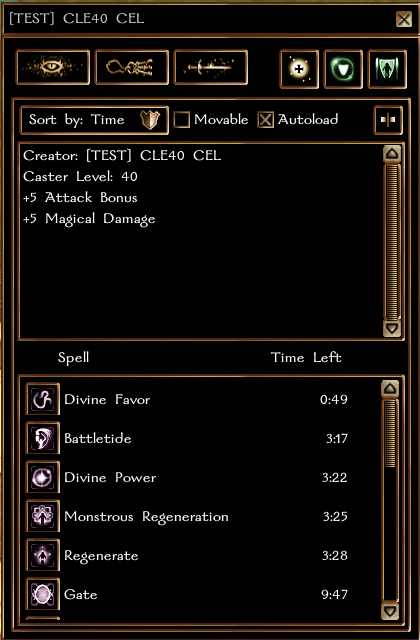
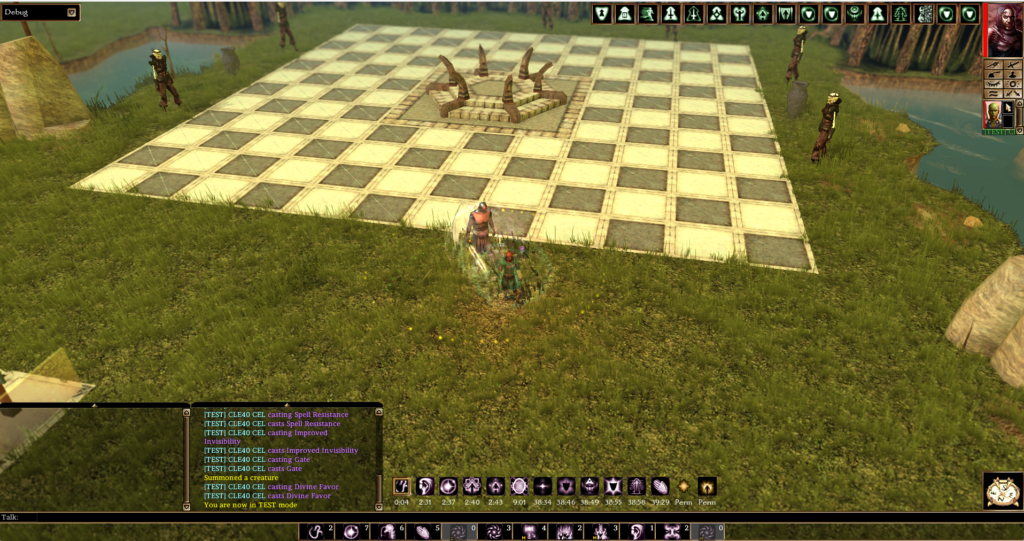
The active effects tab has an Export effects window button, which opens a small window of nothing but effect icons and their cooldowns. It stays open after you close the character sheet.
Effects run left to right, soonest to expire first, permanent ones included, and an icon flashes when it has 60 seconds or less left.
To move it: open the character sheet, tick Movable, drag it where you want, then untick. The position is saved per character and per kind of device - the same character played from a PC and from Android keeps two separate positions. Autoload makes it open by itself at login.
The players list
Also replaced, and it is where the social actions live.
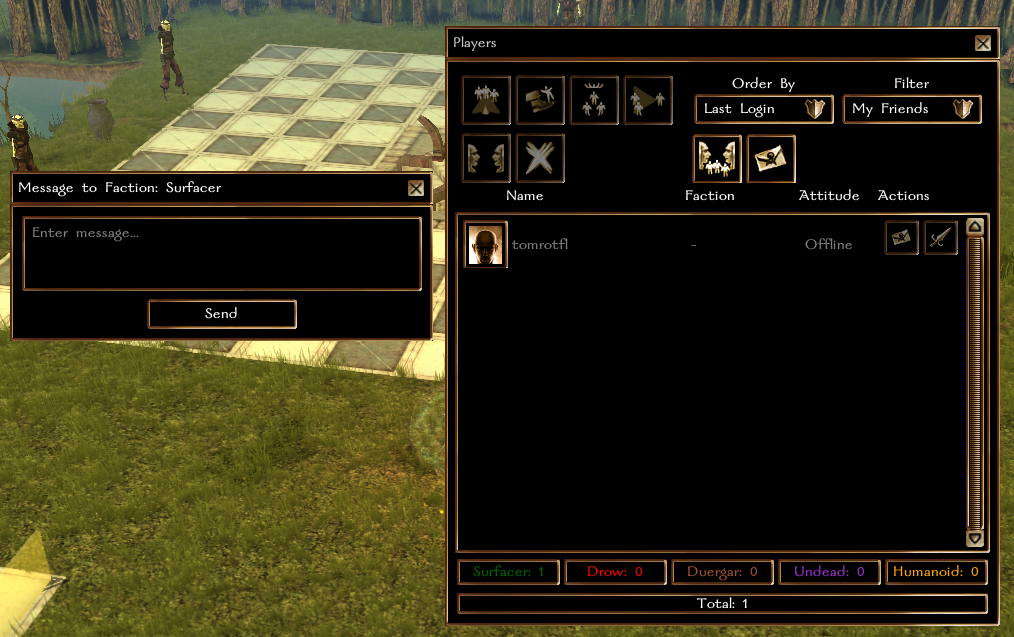
Filter it by everyone, your party, your friends, a single faction - your own is marked - hostile players, or hardcore. Friend requests are sent from here, and a friend stays in the list even while offline. An account name shows under a character name only for someone in your party or on your friends list.
Click a portrait to select someone; the selection is highlighted, so you always know who an action will hit. From there: invite, leave party, remove a member, transfer leadership, private message, message your whole faction, or toggle hostile for PvP. The footer counts each faction's players in its own colour, and the total.


Saved quickbar setups
Your quickbar is the 36 buttons the game gives you, three bars of twelve. This saves the whole thing: ten setups per character, one for a dungeon, one for PvP, one for gathering.
Open a setup from the Player Menu and the window puts your current bar beside the saved one, so you can see what restoring would change before it changes it. Save Quickbar, Restore Quickbar, Delete Quickbar, and a box at the top to name the setup.


Spell books
The same idea for a class that memorises: ten saved spell books per character, with the same compare-before-you-restore window and the same three buttons - Save Current Book, Restore This Book, Delete This Book - and a name of your choosing.


Fast cast
Ten slots, each holding a set of spells, and each one you fill becomes an ability on your radial menu that casts the whole set at once. It is the thing that turns two minutes of buffing into one button - and it behaves differently in combat, which is worth knowing before you rely on it.
Fast cast has a page of its own.
The other windows
- The map - the whole world, your party, what you have explored and where your quests are. See In-game map.
- The journal, filtered and sorted the way you want it - see Quests.
- Mail, reached from the players list.
- Associates control for henchmen, summons and companions.