Crafting
Everything a crafter does is gathering, smelting or making. Three skills carry the whole system, and they are the ones named after it:
| Skill | What it decides |
|---|---|
| Craft: Harvesting | how much a resource node gives up, and how long the work takes |
| Craft: Speed | how quickly you work a recipe |
| Craft: Mastery | how likely an attempt is to succeed, and to come out masterful |
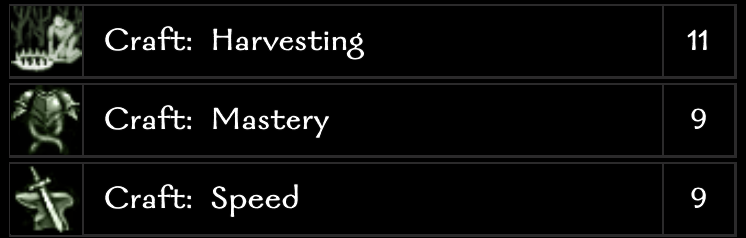
No ability score is read anywhere in crafting or gathering. Each of the three skills is keyed to one - Harvesting to Strength, Mastery to Intelligence, Speed to Dexterity - and that is the only way an ability reaches the system. Nothing is counted a second time on top of the skill rank.
On top of those, every recipe has a knowledge of its own that rises as you make it, so the tenth attempt is not the first. That knowledge belongs to your account, not to one character: every character you play shares it.
Gathering
Resource nodes - trees, veins, gem clusters, herbs, salt - are scattered through the world by the generator rather than placed by hand, and they come back on their own five minutes after they are worked out. What falls out of one lies where it dropped for five minutes before it disappears, and whoever picks it up gets what the person who broke it open earned - swapping tools in between changes nothing.
Every node needs a tool, and the tool decides half of what you take.
- The shape has to match. An axe for timber, a hammer for rock, a blade for herbs and hides. The wrong shape is refused outright, and so are bare hands.
- A purpose-made GTS tool scores its full material tier, from copper at the bottom to adamantium at the top - nine rungs. Resources are graded on the same nine.
- Any other weapon of the right shape stands in at half rate. It is measured by its item tier rather than by a material, and no substitute of any tier reaches an adamantium vein.
- A tool four rungs below a resource cannot open it at all.
The rest is Craft: Harvesting, which sets both the haul and how long the work takes. Neither depends on how hard you hit anything: a tree is as big as it is whether you fell it in one swing or ten.
Anything you could open at all pays a fifth of what it held, never less than one, so an attempt that goes badly is still not a wasted one.
What examining something tells you
- Examine a node and it gives its own name and description, and a breakdown of the multiplier you would get on it: its tier, your Harvesting rank, the tool in your hand and what each is worth. If a tool cannot work it, that line says so.
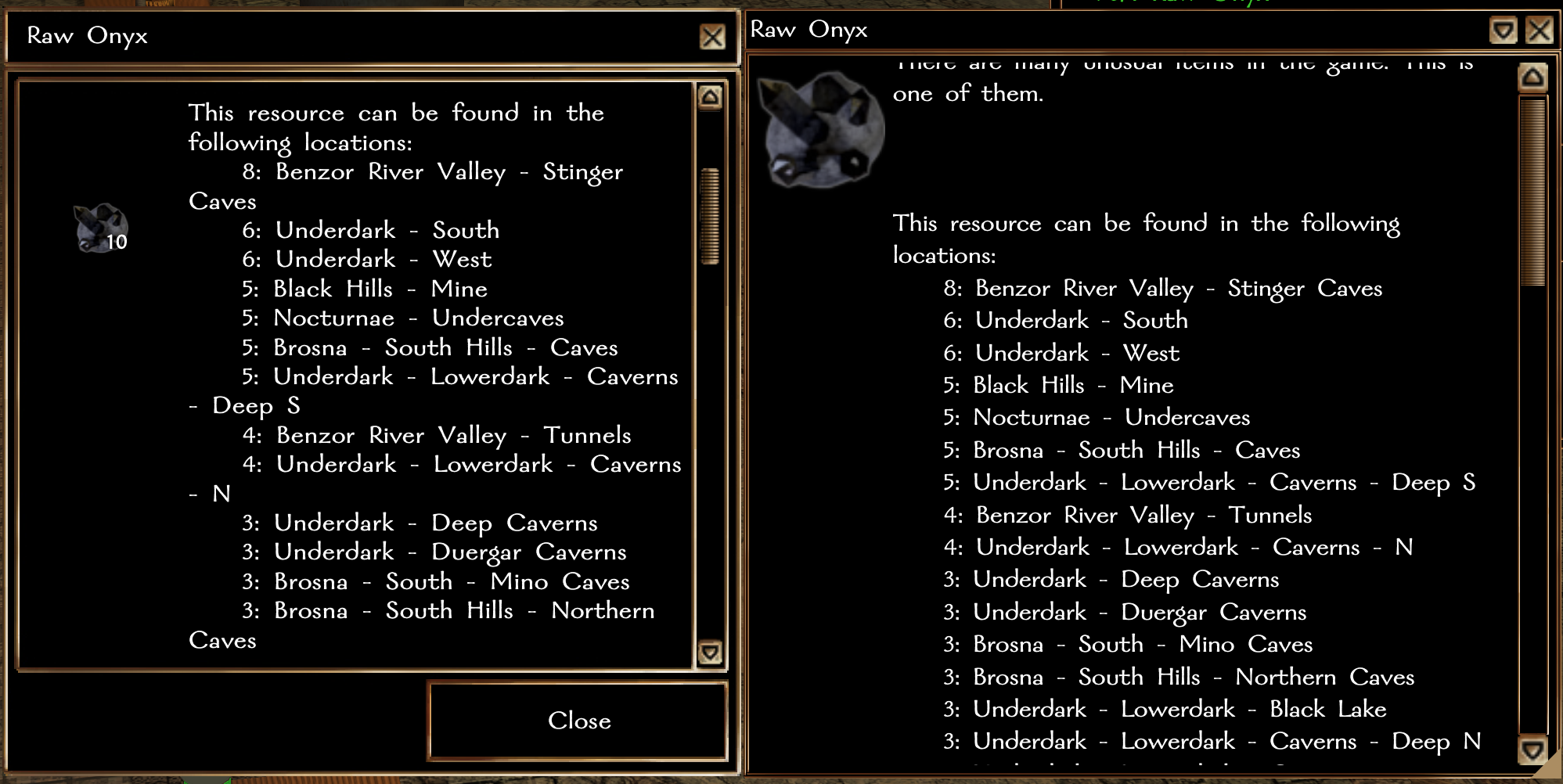
- Examine a resource in your pack - or in the crafting window - and it lists the areas it can be found in, busiest first, counted from the nodes standing in the world at that moment.
- Examine a hide and it lists the areas whose creatures carry that grade, largest group first.
- Examine a carcass and it says how long the skinning would take you.
- Resources carry the same tier colour on their names as gear does.
Ore
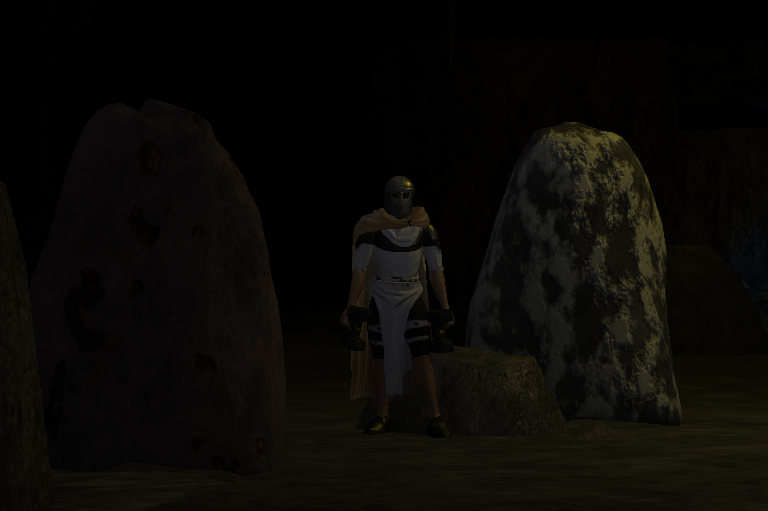
Mined with a hammer, underground, in natural caves. Acid dissolves a vein and wastes the metal in it - it is the quickest way to be rid of one, and it pays nothing. Fire is the opposite: the share of the work done with flame comes out as ingots already smelted in the field, at half what a forge would have given you for the same ore.
| Ore | Tier | Toughness | Where |
|---|---|---|---|
| Salt | 1 | 100 | on water, and in the quarry up to challenge 10 |
| Copper | 1 | 50 | caves, up to challenge 19 |
| Iron | 2 | 100 | caves, up to challenge 19 |
| Coldsteel | 3 | 150 | caves, up to challenge 19 |
| Rubicite | 4 | 250 | caves, challenge 10 to 29 |
| Syenite | 5 | 300 | caves, challenge 10 to 29 |
| Verdicite | 6 | 350 | caves, challenge 15 and above |
| Shadow | 7 | 400 | caves, challenge 20 and above |
| Mithral | 8 | 500 | caves, challenge 30 and above - and from challenge 5 in the Mithril Fields and the Mithril Caverns |
| Adamantium | 9 | 750 | caves, challenge 35 and above, thickest where the lava comes through |
Wood
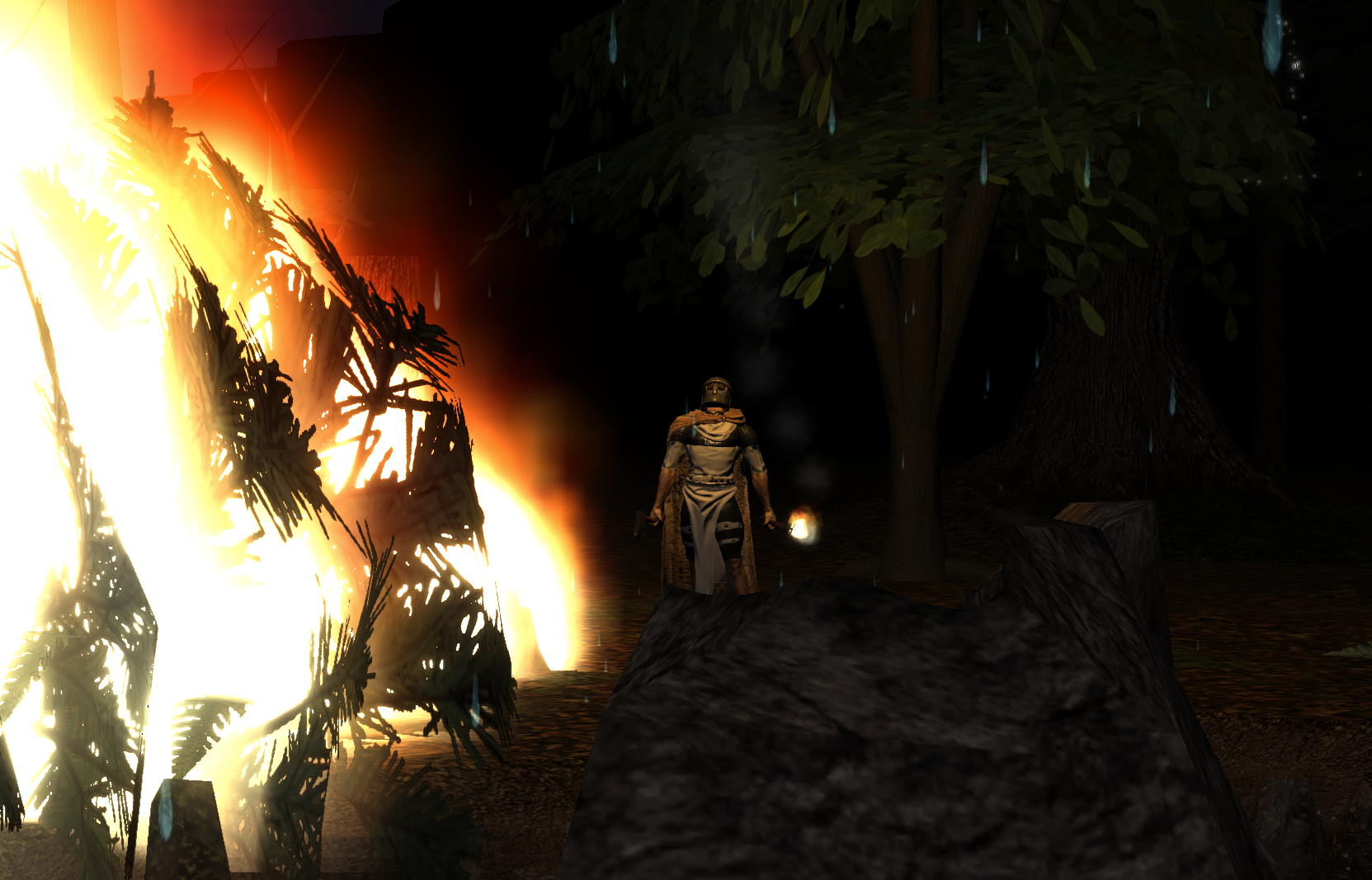
Chopped with an axe - a battleaxe, double axe, dwarven waraxe, greataxe or handaxe. A tree pays out once, in a single pile, when the trunk has been cut through.
Acid rots a tree away and costs you no timber at all. Fire is the one thing that does: a torch or any fire damage sets it alight, and what burns comes out as charcoal instead of wood. Burn more than half a trunk and the pile carries ten charcoal alongside whatever timber is left.
| Tree | Tier | Toughness | Where |
|---|---|---|---|
| Pine | 1 | 50 | forests mostly, also plains and snow, up to challenge 19 |
| Cedar | 2 | 100 | snow mostly, also forests and plains, up to challenge 19 |
| Elm | 3 | 150 | forests, plains and snow, thicker in low ground, up to challenge 19 |
| Ash | 4 | 200 | forests, plains and snow, high ground only, challenge 10 to 29 |
| Red Palm | 5 | 200 | beaches at challenge 10 to 29, and desert oases |
| Oak | 6 | 300 | forests, plains and snow, challenge 15 and above |
| Snakewood | 7 | 300 | standing in water on the plains, challenge 15 and above |
| Desert Ironwood | 8 | 600 | deserts, and thicker near water, challenge 30 and above |
| Petrified Wood | 9 | 750 | underground on bare stone, challenge 35 and above |
Petrified wood does not burn. It cannot be set alight, loses nothing to fire damage and will never make charcoal.
Gems
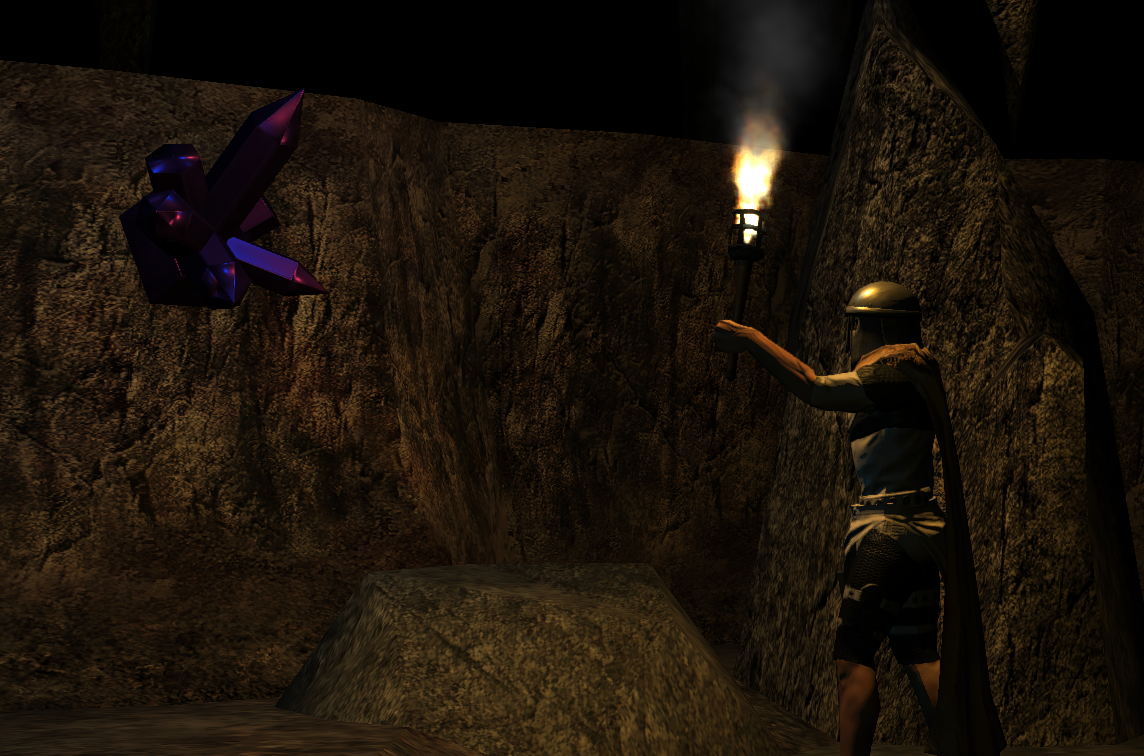
Mined with a hammer, like ore, but they are weak to nothing in particular. They grow on walls, in clusters.
| Gem | Tier | Toughness | Where |
|---|---|---|---|
| Citrine, Jade, Onyx, Opal, Lapis Lazuli, Amethyst | 1 | 100 | caves, up to challenge 19 |
| Topaz, Emerald, Black Sapphire | 5 | 350 | caves, challenge 15 and above |
| Diamond, Sapphire, Ruby | 5 | 500 | caves, challenge 15 and above |
A raw gem is cut at a jeweller's bench, four cut stones from one rough one.
Herbs
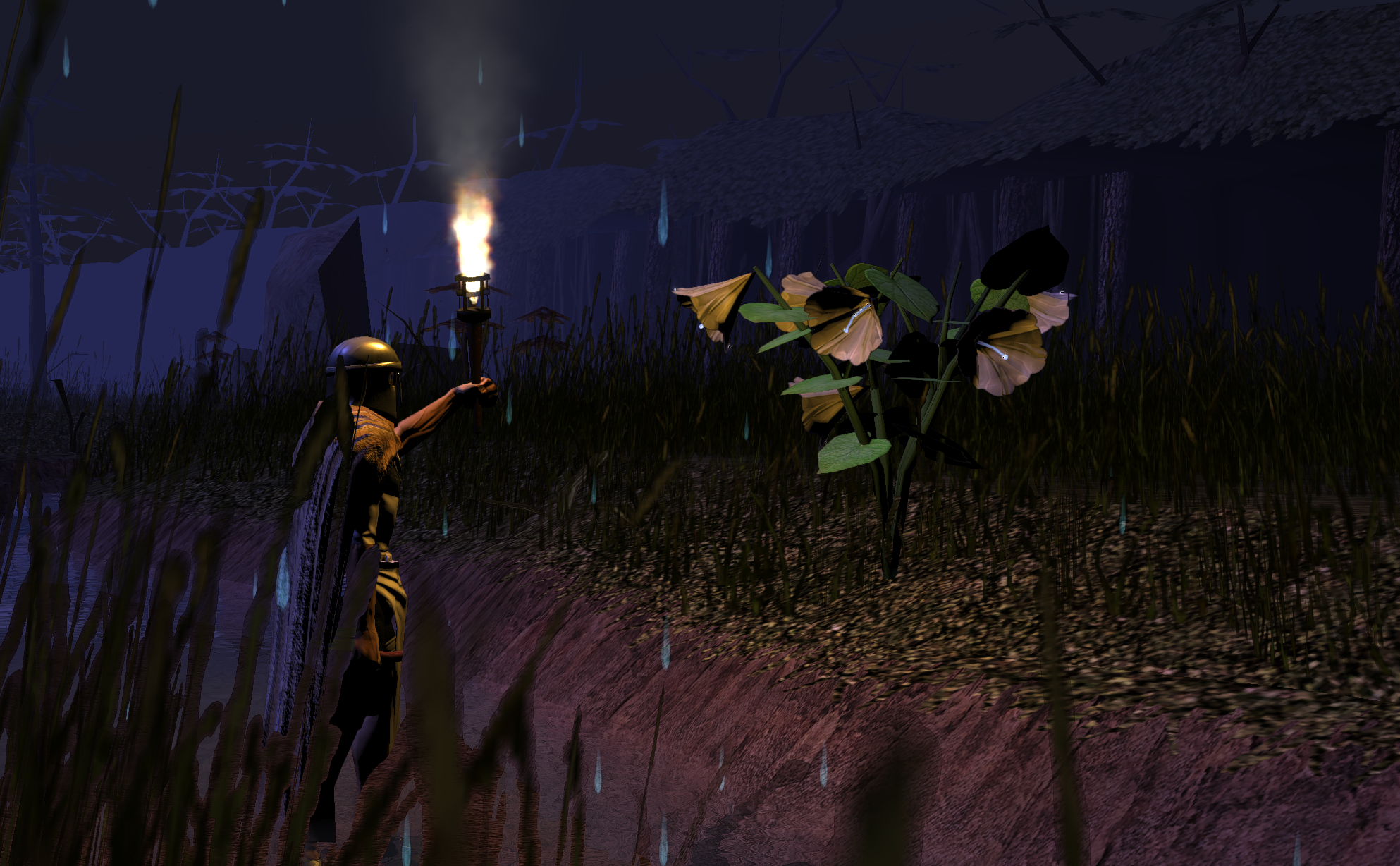
Herbs are cut, not pulled. Carry a sickle, a dagger, a kama or a short sword; bare hands will not do. They have almost no toughness, so the work is the picking up rather than the breaking.
| Herb | Tier | Dyes | Where |
|---|---|---|---|
| Moonflower | 1 | white | meadows beside water |
| Red Sumac | 2 | red | plains and forest, against cliffs and walls |
| Indigo | 3 | blue | open grass |
| Turmeric | 4 | yellow | sand and bare dirt |
| Niphredil | 5 | silver | snow, in the frozen wastes |
| Elanor | 6 | gold | underground, on stone beside water |
| Duskbell | 7 | purple | beside lava, and on bare stone deep underground, challenge 35 and above |
The herb ladder is the dye ladder, and the order is not the one the names suggest: tan, white, black, red, blue, yellow, silver, gold, purple, with purple at the top. Tan and black take no herb at all, so those two are the cheapest cloth on the list and the other seven cost a gathering trip.
Hides
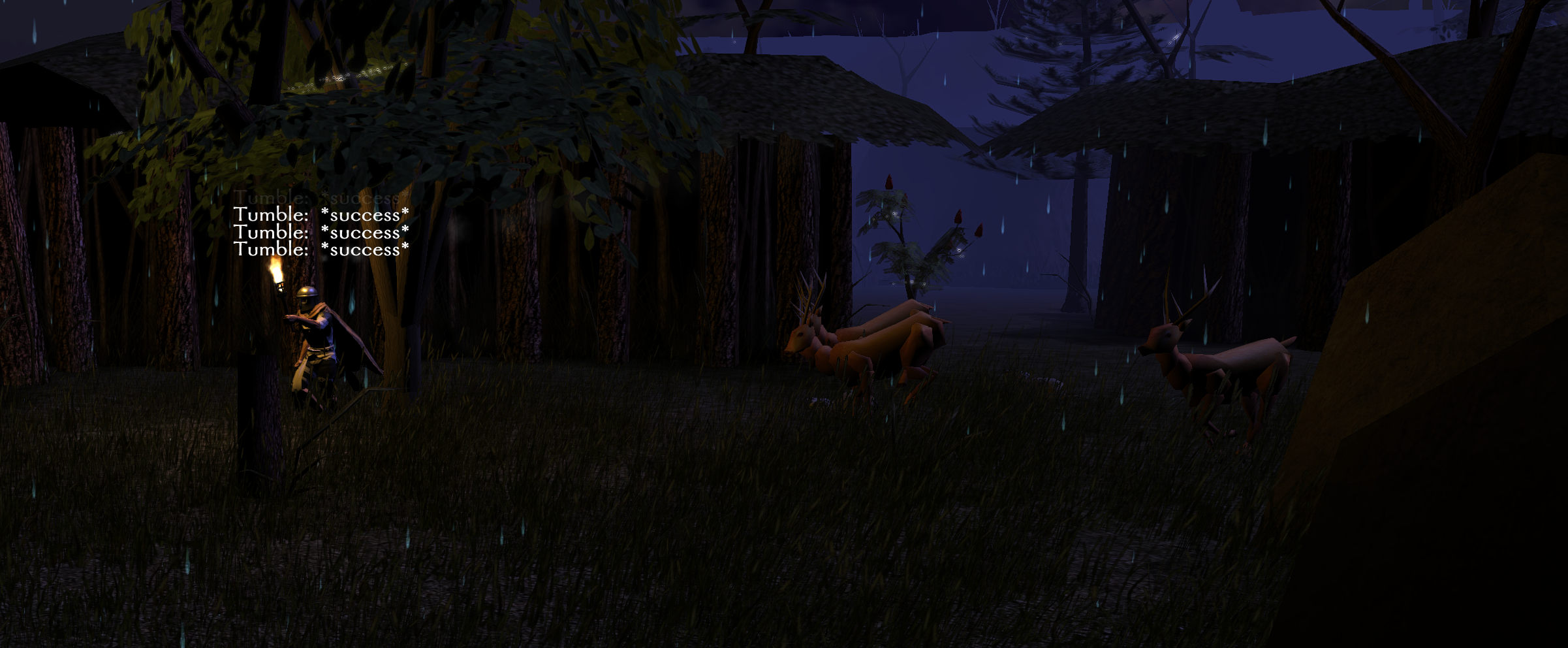
Animals, beasts, magical beasts, dragons and vermin leave a carcass that can be skinned. A creature that is plot, that belongs to somebody, or that is a world boss does not.
Clicking a carcass opens it for loot. To take the hide you bash it - any attack will do - and then stand still while you work. While the hide is still on, the carcass says so in its own name. The knife has to be a dagger: a GTS dagger takes the whole hide, any other dagger about half of it, and nothing else has the point for the work.
The time is your Craft: Harvesting - six seconds untrained, down to one - and it is fixed the moment you start, so a buff running out mid-cut cannot lengthen it. Moving cancels the attempt. Only one person can work a carcass at a time.
Which grade a beast carries is decided by its challenge rating, and there are six:
| Grade | Challenge rating | Serves |
|---|---|---|
| Raw | up to 7 | copper and iron, pine and cedar, tan and white |
| Coarse | up to 12 | coldsteel and rubicite, elm and ash, black and red |
| Thick | up to 19 | syenite and verdicite, red palm and oak, blue and yellow |
| Prime | up to 23 | shadowsteel, snakewood, silver |
| Layered | up to 30 | mithral, desert ironwood, gold |
| Mythic | above 30 | adamantium, petrified wood, purple |
A boss carries extra hides - one more per boss rank, and one more again if it was unique - so a top-rank unique is worth six rather than one.
A pelt is tanned into leather at a leatherworker's bench: one pelt and four salt make eight leather, at every grade.
The forge
A forge is a container that works on its own. Put things in and it runs for as long as it has something to burn; you do not have to stand there, and the window does not have to be open.
- Fuel and temperature. Examine an item to see whether it burns, and at what temperature. The forge takes one unit at a time, chosen at random from whatever is inside, whenever the gauge runs down. Temperature is speed, not power: a hot forge burns through fuel faster and does one piece of work per unit of fuel, so a cold forge with a full hopper finishes the same job more slowly. A hot-burning fuel pulls the temperature up towards its own rating rather than setting it, so several units heat a forge faster than one does.
- Smelting. Put everything a recipe needs in at once and the forge combines them. A partial pile is not enough. Examining an item says what the forge could make from it.
- Scrapping. Anything crafted can go back in to be broken down for part of its materials - never all of them, and the leftover fraction is a chance rather than a promise. The forge needs at least one whole batch, the number a single craft produces, before it will scrap any. A handful of recipes - the named unique pieces - refuse to be scrapped at all. Scrap the forge has just made is safe from being fed straight back in.
- Everything a forge makes stays in the forge until you take it out.
Making something
Crafting happens at a station for its trade. There are six:
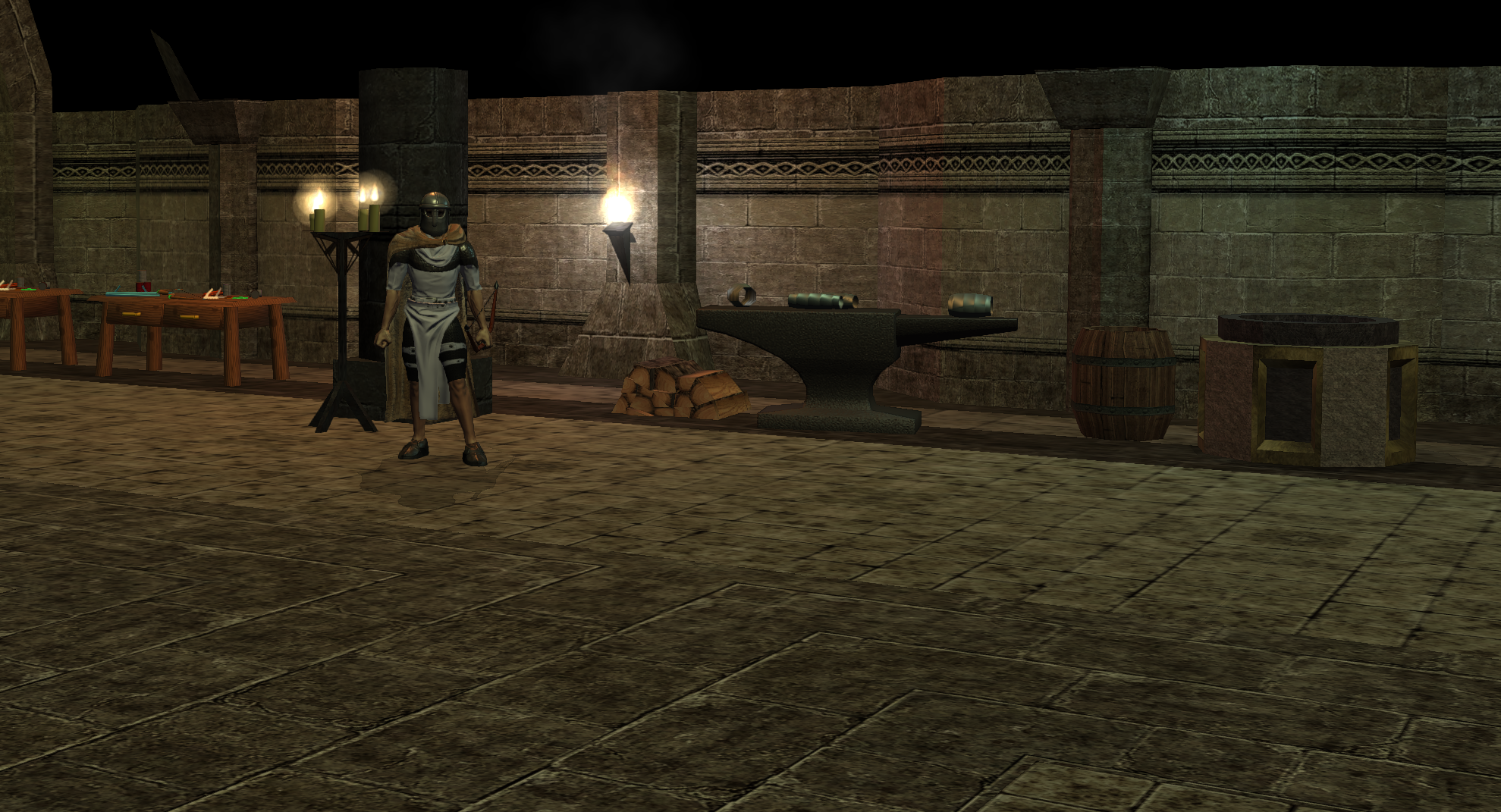
| Trade | Branches | Recipes |
|---|---|---|
| Weapon Smithing | Axe, Blade, Bludgeon, Chain, Light, Spear, Sword | 327 |
| Tailoring | Bags, Belts, Boots, Cloaks, Gloves, Robes | 141 |
| Jewel Crafting | Amulets, Gems, Rings | 126 |
| Armor Smithing | Armor, Helmet, Shield | 102 |
| Archer Crafting | Ammunition, Bows, Crossbows, Slings | 81 |
| Leatherworking | Leather | 6 |
Work only accrues while you are standing at a station for the right trade, within about three metres of it and in the same area. Walking away pauses the queue rather than cancelling it, but logging out empties it.
Unlocking
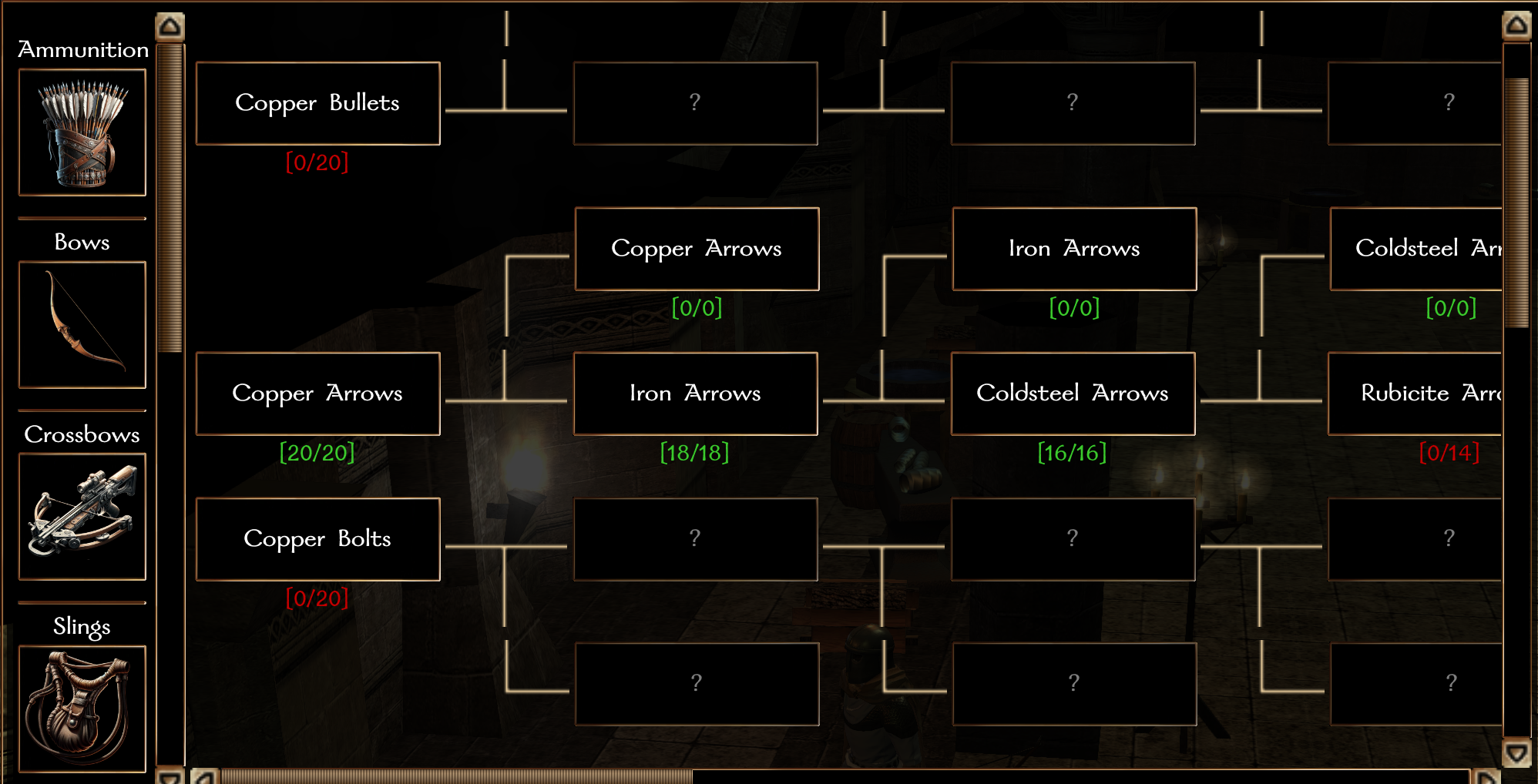
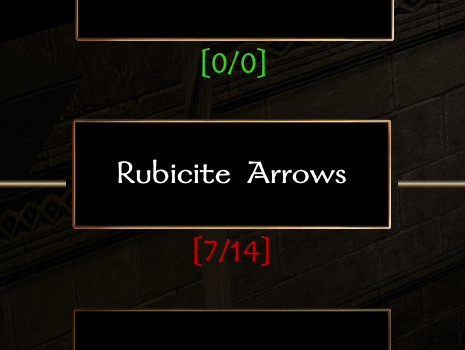
A recipe opens once you have mastered the one before it. The first recipe of each branch is open from the start. Until it opens a recipe can be read but not queued, whichever view you find it in. Every recipe's prerequisite is listed on every recipe.
Success, knowledge and mastery
Two numbers add together:
- Knowledge of the recipe. Every attempt teaches one point, succeeded or failed, up to that recipe's maximum - so a recipe listed as twenty is twenty attempts from nothing to complete. Knowing it completely is what carries Success to 100%, and it is also what unlocks whatever comes after it.
- Craft: Mastery, worth half your rank as a percentage. There is no cap on the skill.
Anything above 100% becomes Mastery - the chance that what you make comes out masterful. A masterful item counts as one item tier higher than the same item made plainly, which is what lets it reach a higher set bonus. Containers are never made masterful.
A failed attempt is not wasted: it returns scrap, and the recipe's knowledge goes up either way.
Speed
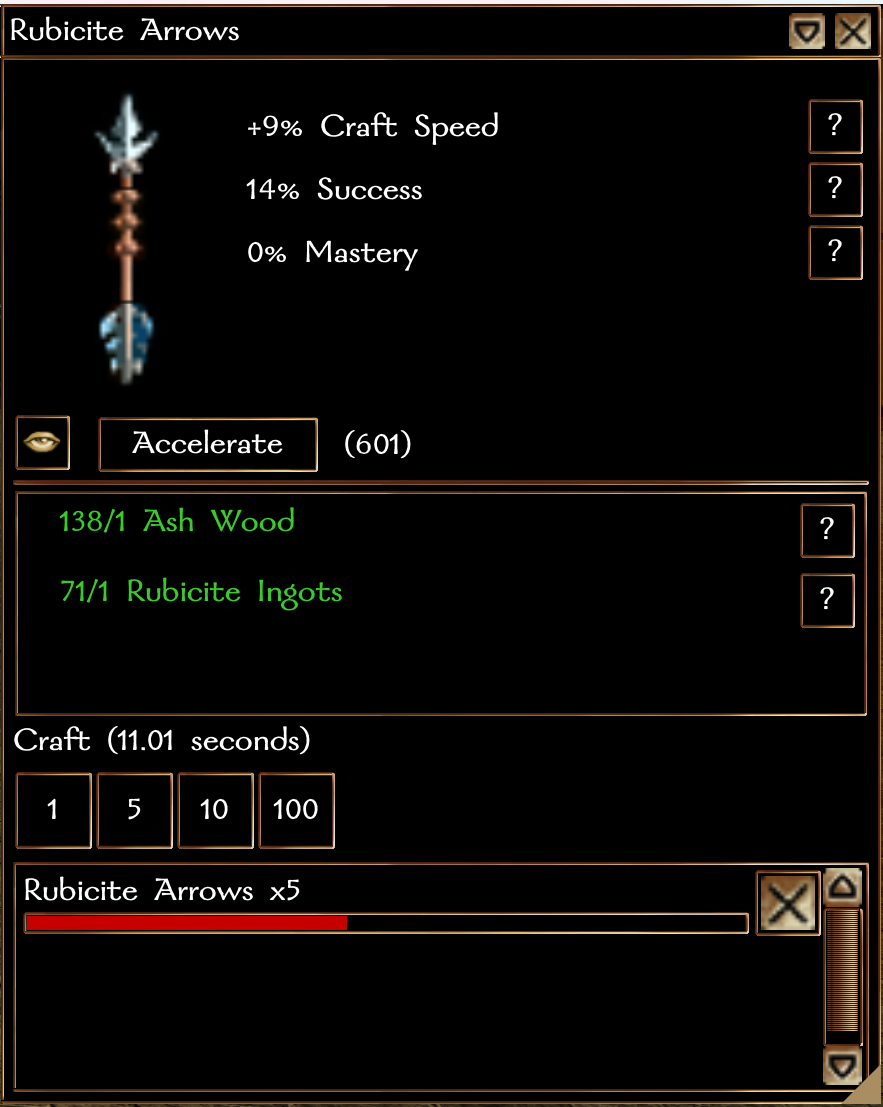
Craft: Speed is worth one per cent per rank, and synergy adds up to 10% more for each related recipe you have progress in, in proportion to how far that one has come. Mastering the copper longsword makes the copper shortsword quicker. The ? beside each number in the window breaks down where it came from.
The bench
A station opens the crafting bench: the trade's branches down the left, a search box, and the recipe list beside the detail panel.
- The search box matches the recipe, what it produces and its ingredients, so searching a material you have just dug up shows what it is good for.
- Show narrows the list to Craftable now, Missing materials and Not yet unlocked. It only changes what is listed; ticking Not yet unlocked unlocks nothing.
- Tree view swaps the list for the tree, which is the clearest view of what leads where. The bench reopens in whatever view and at whatever size you left it, per account.
- How it works is a button on the bench and on the forge, carrying the same rules as this page.
- Use old crafting UI is a checkbox on the window itself, if you would rather have the old tree window. The choice is remembered per account, and the old window carries the same box to come back.
Materials and the queue
- An ingredient listed as 0/1 that never seems to be used up is a tool. You have to be holding it to work, but it is not consumed. Eleven of the named unique recipes ask for one this way.
- The small buttons above the ingredient list choose where materials are drawn from. Your pack always counts; your vault can be switched on. Whatever is queued is reserved, so the same ingot is never promised to two crafts.
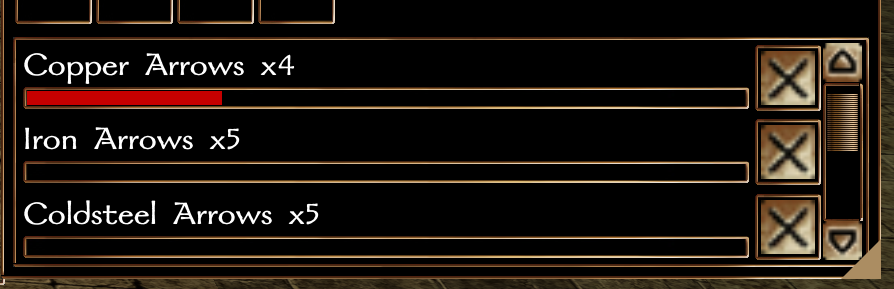
- 1, 5, 10 and 100 queue that many. The queue can be reordered, and closing the window leaves a small progress window behind. If your pack fills up the work stops until you make room.
- Accelerate spends an acceleration point to grant a point of recipe knowledge outright, with nothing crafted. The number beside the button is how many you have left.
Every recipe
All 783 of them - what each makes, what has to be mastered first, what it costs and what scrapping it returns - are on every recipe. It is built from the files the game reads, so a new recipe appears there by itself.